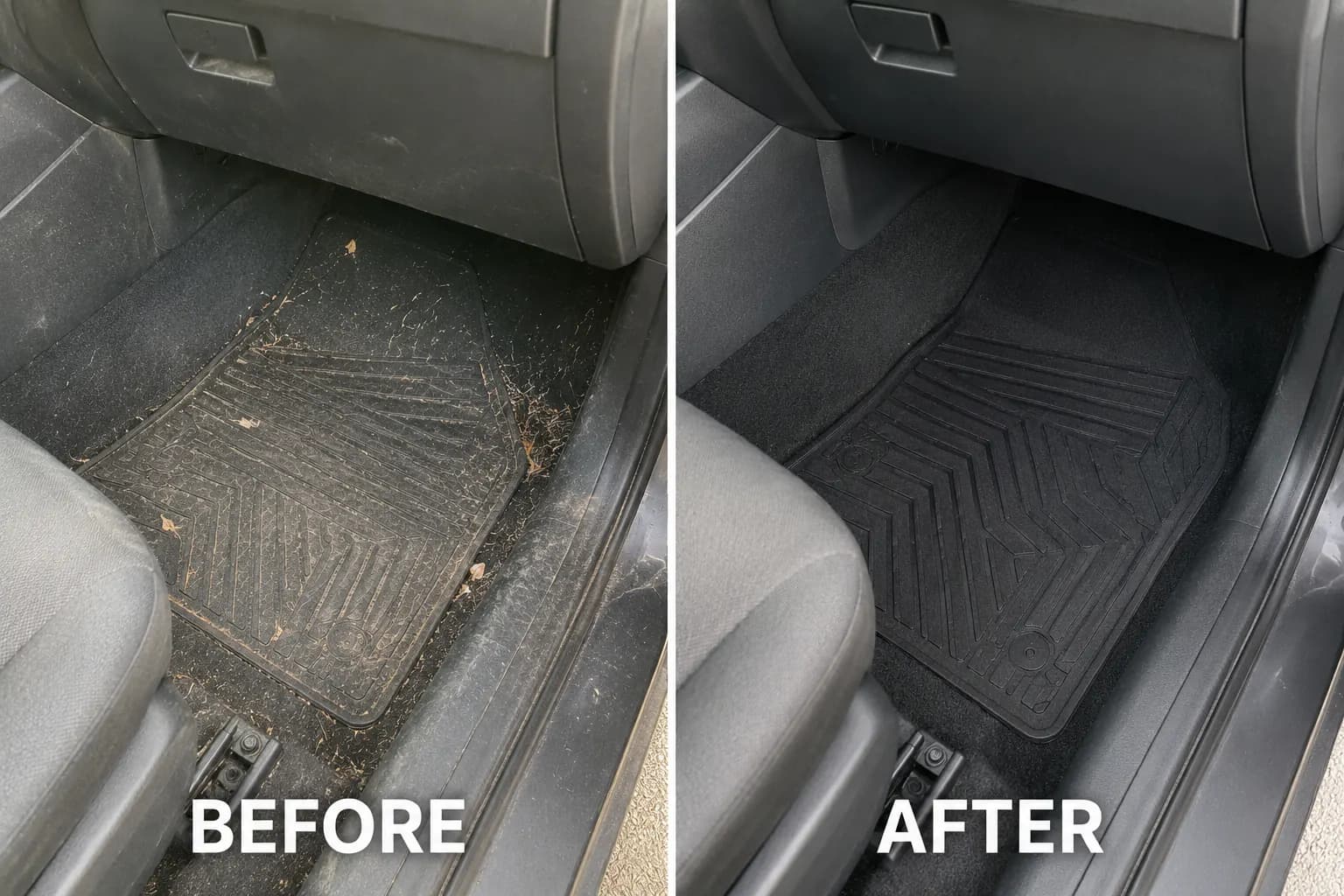
Winter salt is one of the most common reasons Calgary vehicles need a deeper detail. It gets tracked into carpets and mats, dries into white rings, hides around pedals, collects on door sills, and sits on lower exterior panels for weeks. The damage does not always look dramatic at first, but salt becomes harder to remove the longer it sits.
The goal is simple: remove salt before it bonds, crystallizes, stains, or holds moisture against materials that were not meant to stay wet. You do not need to detail the vehicle after every storm, but you should take salt seriously once it is visible inside the cabin or built up on paint, wheels, and trim.
Why road salt is such a problem
Salt is useful on roads because it lowers the freezing point of water. Inside your vehicle, that same chemistry creates problems. Salt attracts moisture, dries into mineral crystals, and can leave carpet fibres stiff or discoloured. On the exterior, winter grime can cling to lower doors, rocker panels, wheels, wheel wells, and the rear bumper area.
Calgary drivers often notice the cabin first. White marks appear on rubber mats, then around mat edges, then on the carpet beneath. If wet boots keep grinding salt into the same area, it can move deeper into the fibres. Vacuuming helps with dry grit, but it will not fully remove dissolved minerals that have already soaked in.
The City of Calgary road salt management plan says winter operations use road salts, abrasives, and brines, and it reports approximately 40,000 to 50,000 tonnes of road salts applied annually. For car owners, the practical takeaway is simple:
- Salt is normal on Calgary roads.
- Salt residue does not stay outside the vehicle.
- Interior carpet needs a different process than exterior panels.
- Waiting until salt dries repeatedly makes the cleanup harder.
What to do first
Start dry. Remove loose items, shake out rubber mats, and vacuum the footwells before adding moisture. This matters because spraying water onto dry salt too early can spread it deeper into carpet.
Once loose grit is removed, inspect the problem areas:
- Driver footwell and pedal area.
- Passenger footwell.
- Rear mats and seat tracks.
- Cargo area if boots, strollers, pets, or sports gear sit there.
- Door jambs and lower door edges.
- Lower exterior panels and wheels.
If the salt is only on removable rubber mats, you may be able to rinse and dry them separately. If it has reached carpet, fabric, seat rails, or trunk liners, a more controlled process is better.
Do not soak the carpet
One common DIY mistake is using too much water. Salt needs moisture to dissolve, but soaked carpet can create new problems: damp smell, slow drying, mildew risk, and residue that spreads beyond the original stain. The process should be damp, controlled, agitated, extracted, and dried.
For light stains, a mild vinegar-and-water solution or dedicated salt neutralizer can help dissolve the minerals. Spray lightly, let it dwell briefly, agitate with a soft brush, then blot or extract. Repeat if needed. The key is removing the dissolved salt from the carpet, not just making the stain disappear while it is wet.
Use this order:
- Vacuum dry grit first.
- Apply only enough moisture to loosen residue.
- Agitate gently with a soft brush.
- Extract or blot the dissolved salt out.
- Dry fully before judging the result.
When salt has already set
If the carpet feels stiff, crunchy, or repeatedly dries with the same white outline, the salt has likely worked deeper into the fibres. At that point, normal wiping is not enough. A professional interior process uses vacuuming, targeted chemistry, agitation, steam where appropriate, and extraction to lift more residue.
That is where an Interior Deep Clean makes sense. It is designed for the kind of winter cabin reset that Calgary drivers need after months of slush, gravel, and salt. The work is slower than a basic refresh because the goal is to remove residue, not simply cover it.
Exterior salt matters too
The interior is only half the story. Road salt and winter film also sit on exterior surfaces. Lower doors, rocker panels, wheels, and rear panels usually collect the worst buildup. Even if modern paint is durable, letting grime sit for weeks is not ideal. Wheels and brakes collect a mix of salt, slush, brake dust, and road grit.
Exterior washing during winter can be tricky because weather, drainage, and freezing temperatures matter. When conditions allow, a paint-safe wash helps remove corrosive film. Once temperatures are more stable, a post-winter exterior wash and protection step is a good reset.
Prioritize exterior zones in this order:
- Wheels and tires.
- Rocker panels and lower doors.
- Rear bumper and hatch area.
- Door jambs.
- Exterior glass and mirrors.
Signs you should book a winter cleanup
Book a deeper cleanup if you see any of these:
- White rings on carpet after it dries.
- Stiff or crusty mat edges.
- Damp smell from footwells.
- Salt around pedals or seat rails.
- Heavy road film on lower panels.
- Wheels that stay brown or grey after a basic rinse.
- A vehicle that will soon be listed for sale.
Those signs mean the vehicle needs more than a cosmetic wipe. The sooner the residue is removed, the easier it is to improve.
How to prevent repeat damage
Good winter mats help, but they are not magic. Salt still escapes around edges, especially when mats overflow or shift underfoot. Empty standing water from rubber mats, shake them out regularly, and avoid letting slush dry in the vehicle overnight when possible.
For families, trucks, rideshare vehicles, and pet vehicles, prevention is harder because the vehicle is used constantly. In those cases, it is realistic to plan one mid-winter maintenance cleanup and one stronger spring reset.
What Detail Pals checks during confirmation
Before confirming a salt cleanup, Detail Pals reviews vehicle size, salt severity, carpet type, parking access, timing, and whether the exterior should be included. That call matters because a small sedan with light mat stains is a different job from a three-row SUV with salt in every footwell.
The goal is not to overcomplicate the booking. It is to make sure the package matches the vehicle before anyone commits.
Ready for salt cleanup?
If winter salt has moved past the rubber mats, start with the matched interior cleanup request and confirm the final scope by phone.
Get a winter salt cleanup quote
Related questions
Q: What should I do first for winter salt in car carpet?
A: Start dry: remove items, shake out mats, and vacuum loose grit before adding controlled moisture or salt neutralizer.
Q: Can road salt permanently stain car carpet?
A: It can leave stubborn white rings, stiffness, and residue when it sits through repeated wet-dry cycles, especially around mat edges.
Q: Should I soak salt stains with water?
A: No. Use controlled moisture, light agitation, and extraction or blotting so dissolved salt is removed instead of spread deeper.
Q: Does exterior winter salt matter too?
A: Yes. Lower panels, wheels, jambs, and rear areas collect winter film and should be washed when weather and drainage allow.
Q: When should Calgary drivers book salt cleanup?
A: Book when salt has moved past rubber mats into carpet, when footwells smell damp, or when spring road film is visible on lower panels.